


This Sweet Survived Generation
Every festival has a symbol. For Makar Sankranti, it is not the kite cutting through the winter sky, nor the gentle warmth of the sun—it is a small bite of tilgul. Sesame and jaggery, pressed together, passed from palm to palm with a quiet blessing: til ghya, god god bola. But have we ever paused to ask—how did this humble sweet survive centuries of change? Why did tilgul remain untouched by time when so many traditions faded away?
Because tilgul is not just a sweet. It is a story.
Long before refined sugar entered our kitchens, jaggery ruled Indian households. It was harvested, boiled, and shaped with care, carrying the strength of the sugarcane and the patience of the farmer. When combined with sesame—another ancient superfood—tilgul became more than food. It became nourishment designed for winter, wisdom wrapped in sweetness. Isn’t it remarkable how our ancestors understood seasonal eating without modern science?
Sesame warms the body, strengthens bones, and fuels energy during cold months. Jaggery balances it with iron, minerals, and natural sweetness. Together, they prepare the body for the sun’s northward journey. Could there be a better example of nature and tradition working in harmony?
Tilgul survived generations because it served a purpose. It healed when winters were harsh. It united people when words failed. It softened conversations and mended differences. When you offer tilgul, you don’t just offer sweetness—you offer goodwill. In a world that now speaks loudly, isn’t this quiet ritual more relevant than ever?
But here lies the uncomfortable truth—today, not all tilgul carries the same meaning.
Modern shortcuts have diluted tradition. Refined sugar often replaces jaggery. Artificial colors replace natural warmth. What remains looks festive but lacks soul. And when the core ingredient loses its purity, the tradition begins to weaken. Can a ritual survive if its essence is compromised?
This is where authenticity becomes crucial. This is where Aadisha Jaggery brings the story back to life.
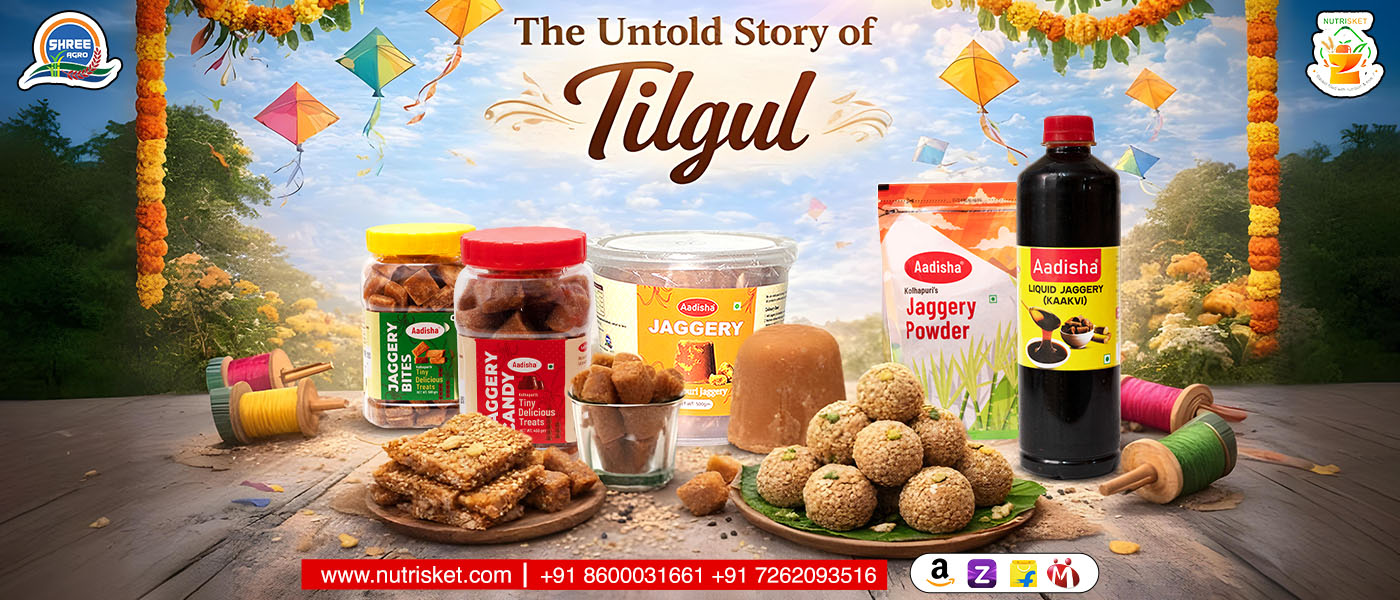
Aadisha Jaggery is made the way jaggery has always been meant to be—chemical-free, unrefined, and naturally processed. No artificial additives. No synthetic sweetness. Just pure jaggery that retains its minerals, aroma, and depth. When tilgul is made with Aadisha Jaggery, it doesn’t just taste right—it feels right.
Think about it—when you share tilgul with your family or neighbors, don’t you want to share something honest? Something that respects health, tradition, and the season? Isn’t Sankranti about mindful beginnings rather than empty rituals?
Tilgul survived generations because it evolved without losing its core. The shapes changed. The recipes varied. But the heart remained the same—natural ingredients, seasonal wisdom, and emotional connection. And Aadisha Jaggery stands for that same continuity. It doesn’t modernize tradition by erasing it. It modernizes tradition by protecting it.
In today’s fast-paced world, we often measure value in convenience. But traditions measure value in meaning. Tilgul doesn’t shout for attention. It waits patiently, year after year, reminding us that sweetness doesn’t have to be artificial, loud, or excessive. Sometimes, it just has to be real.
So this Makar Sankranti, ask yourself a simple question—are you passing on a ritual, or are you passing on a legacy?
Because when tilgul is made with Aadisha Jaggery, you’re not just celebrating a festival. You’re honoring generations of wisdom. You’re choosing purity over processing. You’re letting an ancient sweet continue its quiet journey through time.
And that is how tilgul survives—one honest ingredient, one mindful choice, and one shared smile at a time.